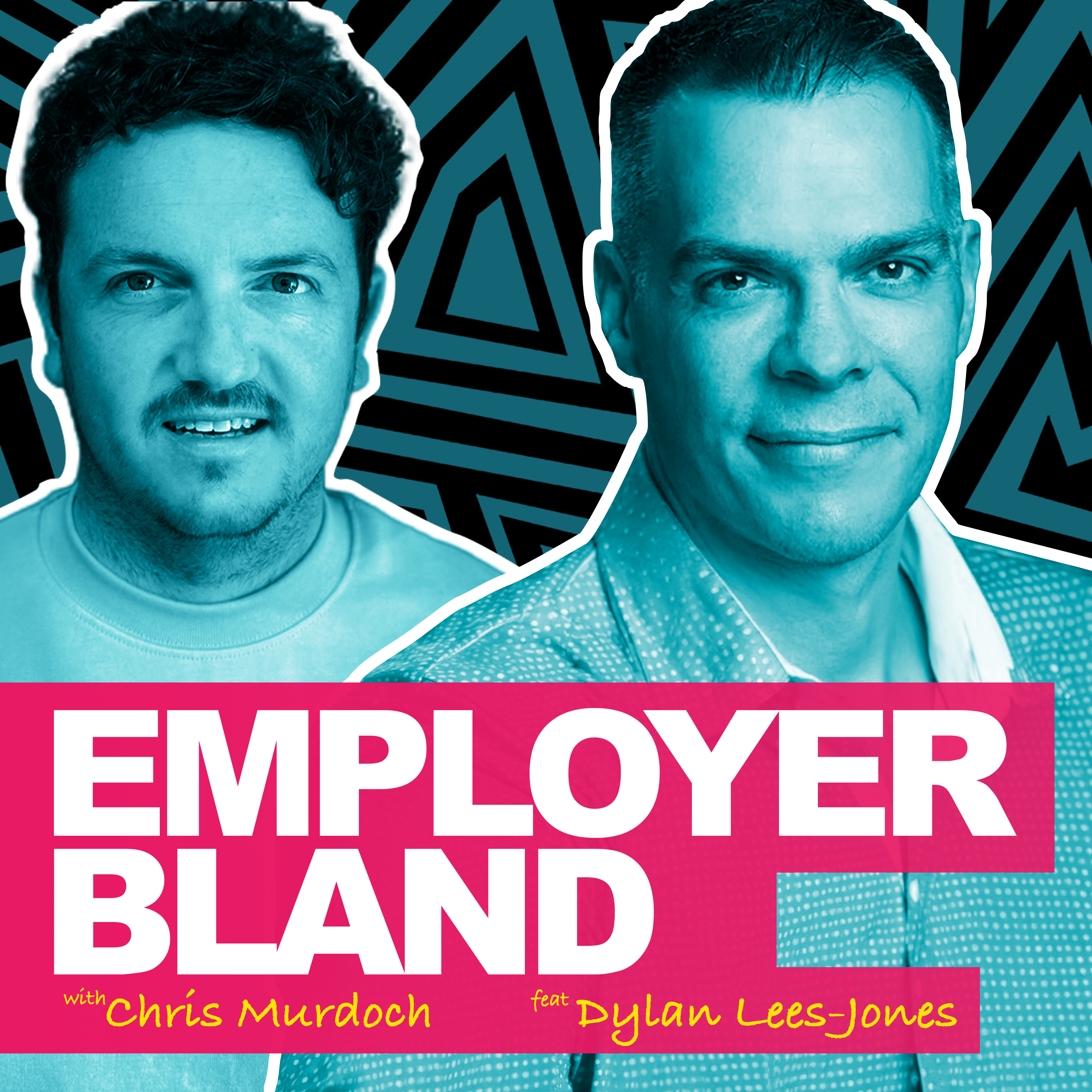
Episode Transcript
[00:00:02] Speaker A: Nile, how are you?
[00:00:03] Speaker B: Hello. How you doing?
[00:00:05] Speaker A: I'm really good. How are you?
[00:00:06] Speaker B: Yes, good. I'm conscious that my audience may be hearing my Voyse for the first time, or if people see my face on videos, this might be the first time hearing my Voyse So. Hello.
[00:00:17] Speaker A: Well, this is what I was thinking because I've been following you for a long time and I'll get into kind of how we initially met as well. But.
But, yeah, and of course you've started doing some bits on LinkedIn. You've been incredibly active across social media for a long time, amassing a crazy, crazy size following. But, but look, firstly, I massively appreciate you jumping on the Employer Bland podcast, and I've got a feeling the only reason you've probably done it is as a, you know, because we go back, you know, a little while. You know, I met you six or seven years ago when you were working at Big Hand, a legal tech business in, in London.
But it would be really nice, you know, firstly, can you just give us a little bit of an introduction? Because I've got a feeling a lot of people, even though LinkedIn isn't currently your. Your number one kind of channel, but I've got a feeling quite a few people might recognize you now.
Can you just give us a really quick kind of intro to. To who you are?
[00:01:12] Speaker B: Yeah, sure. So, yeah, I'm N. McMillan. You may have seen my Voyse helped a lot of people pass a poo over the years. You may have seen my face on social media. You wouldn't have heard my Voyse I. Essentially what I do is I insert myself into viral videos as the awkward point of view character, and I insert myself uncomfortably in other people's videos, pulling facial expressions and doing a physical comedy. So you may have seen my face. No one ever remembers the name. And I. And I drink milk a lot. You'll either know me as the milk guy or the awkward guy.
[00:01:45] Speaker A: And. And you know what? I've got to get into the milk thing. I've been following your videos for ages. I think the great thing about your content, Niall, is that I watch your content all the time. I've got four daughters, two of them, the two that have actually got access to a mobile and social media, they watch your videos all the time. When I told them that you were coming on the podcast, they genuinely couldn't even believe me. But the milk thing, can you, before we get into it, what is the milk thing? What's that about?
[00:02:08] Speaker B: Yeah, it's not a question I ever thought. I'd have to answer really what the milk thing is.
Essentially the character is an awkward kind of introverted character and he doesn't, he finds himself in social scenarios he doesn't want to be. And because I'm always at parties, there would be often times that when I'm at parties I'd have alcohol in the videos. And what would happen was when I'm recording the videos, I'd have beer or wine and I'm not that huge of a drinker like at all now. And I would be filming a video with beer and then I'd finish the video and I'd pour the beer away and I was going through beer and wine like nobody's business. And then one day I didn't have any, any alcohol in the house. I decided to use milk in the video because where I.
People who haven't seen my content, I. I'm essentially standing in front of a green screen on my own and I insert myself into these videos.
So when I've got water, it wouldn't work because a green screen will go right through. It's a pre, it's a post production nightmare. So I use milk in one video and because the kind of character is awkward and it's uncomfortable, it's an uncomfortable. Watch a lot of my videos, the milk kind of adds a layer of awkwardness, creepiness, weirdness, uniqueness, innocence. And the child's. The, the character is kind of like childlike. So the milk kind of adds to it. That was a complete accident. I didn't think of this at all. I just had milk in one video and the engagement kind of spiked a little bit. A lot of people questioned the milk, mentioning the milk and I just carried. Carried it on and it kind of spiraled out of control where I am kind of known as a. The milk guy now. And it's. Now if I don't have the milk, it's, it's weird. Which is, yeah, strange in itself. So that's how the milk came about.
[00:03:48] Speaker A: Gotcha. I was gonna say, if you did replace it for a different drink, I think there would be massive uproar, to be honest. So, yeah, keep the milk.
But, but look, just to put a bit of context around the episode and kind of you being here today, so I, I first met you, like I mentioned a minute ago, six or seven years ago, you were working with this awesome company in, in London. They work in the technology space. I think it was the legal sector, wasn't it? With.
[00:04:15] Speaker B: Yeah, yeah, yeah.
[00:04:16] Speaker A: At the time, working on an employer branding project. You Were one of the, you know, there's a lot of employee storytelling and culture led videos and all sorts of, you know, different types of cool content we were creating. And you were, whether you actually knew it or not, you were one of the stars of the show. And the reason I say that is that we did a, I remember it vividly. We did a cutaway bloopers video. Don't know if you ever got to see that internally.
[00:04:37] Speaker B: Yeah, I think I did.
[00:04:38] Speaker A: Yeah.
[00:04:39] Speaker B: Yeah. And.
[00:04:40] Speaker A: And you featured in a lot of it, you know, because, yeah, you were just a great active participant, brought a lot of, you know, life and humor to the, to the project and, and yeah, but look, here we are today.
Seven plus, you know, million followers. Well, across all platforms. Let's just round it up. You know, you, you must be touching 10 million followers now across all platforms now, which is just ridiculously phenomenal. I remember speaking to you six years ago. You were telling me you had this small passion for content. You might take it a little bit further. And in a relatively short period of time it's just gone absolutely bananas. And, and I can see why, because the content transcends, transcends across like all ages like I mentioned with me, my daughters and, and I can imagine as well now with like demographics generally with the kind of, the muted like no speaking kind of thing. I can imagine it transcends like you must get the analytics but from country to country to country it must, it must be. Be popping off in all sorts of places around the globe.
[00:05:46] Speaker B: No, absolutely, absolutely. And again that was a kind of happy accident I stumbled across is being non verbal. I do have, that's the only reason I have such a large audience is because it trans transcends to all these different countries and humor. And I didn't realize at the time humor is so international. We're all just the same. We all have the same kind of funny bone that we want to, we want tickled. And yeah, so I have Brazil, Germany, Jamaica, like all these different places. And I have the kind. My UK following is actually quite small in comparison to the rest of my following, which is quite bizarre.
But yeah, being silent has helped. Yeah, I suppose the algorithm kind of puts me out to all different, all different countries rather than keeping me just in the uk.
And it certainly helped explode my following in that sense. Yeah, just by talking. But again, that was a complete accident. That was just because I didn't talk in two or three videos. Notice the engagement. People wondered what I sounded like, even though, you know, they could probably scroll Three videos down and be able to hear my Voyse So yeah, another thing that I've accidentally stumbled upon that has been a very happy accident.
[00:06:54] Speaker A: Yeah, awesome. So if we go back to, I wouldn't say the beginning but you know, for example, when I, when I met you six or seven years ago, you know, this, this thing was probably a bit of a pipe dream back then. I don't know, it was, you know, nothing had properly kicked off for you. But going back to kind of those times when you're at that pivotal moment of full time employment, I'd imagine, you know, family mortgages and all this sort of stuff and there's this content kind of idea dream that you have.
Talk to us about that moment in your life and what was that like and what was the kind of tipping point for you to move it forward?
[00:07:28] Speaker B: Yeah, sure. So essentially the way it's kind of come about for me is I kind of had an accent background and I have a very techie background. So as in when it looked, when you take me back to school, I had a, in drama and I had a, in it and I had two paths there. I pursued the, the acting path and it was very dull, it was very boring. I was trying to be cookie cut. I went to college for that and it just wasn't fun and it wasn't, you know, it wasn't as entertaining as I hoped. So I went and quickly pivoted to the it path because I enjoyed that a great deal as well and, and obviously the money instability is there. I pursued that path, I built a career, I, I got married, had three kids and I got to a point where I had everything that society kind of told you to have. You kind of good career, good high paying role, kids, marriage. And I found myself unhappy not because of my kids and my wife, but just because, you know, I, I wasn't scratching that creative itch that I had. I, I think everyone has a little nuance about them, a little something that makes them special and you've got to kind of exercise and, and you know, enjoy, enjoy that part of yourself and just don't concentrate on the corporate side of things. You got to have some fun as well. So I started to scratch that itch with creativity a little bit more. And this was kind of before lockdown, when TikTok started to explode, I just started to work on myself, to understand myself and why I was unhappy. So I kind of went down a self development path and you can probably see behind me I've got like loads of books, self development And I can't. That's what I learned. I've read 30, 40 books and I got to my point where I kind of had this creative itch that I needed to scratch. So I thought I set a plan where I was going to post content to scratch that itch on, on, on social media. And I remember kind of setting, setting something in stone where I was going to go. Two years of just creating content with no expectations other than just, just being creative and having fun.
[00:09:32] Speaker A: Yeah.
[00:09:34] Speaker B: And I did that for two years. Posting every single day. Very like very accountable on that. Posted every single day. And here I, I'm like six, seven years down the road now still. I haven't missed a day since, since that.
[00:09:48] Speaker A: Every year. Wow.
[00:09:50] Speaker B: Content.
And that's why I'm at the point I'm at now is just that no one cared for two years. And I was posting every day and trying different things. It was like a playground.
And then I think it was after three years people started to care. And I found this kind of niche, the silent niche where I can put myself into the videos and I found the sweet spot of the content that I like to create where I can give the most value, where I can give the most joy.
And then I love what I do. So it, doing it every day now is so routine. It's like not brushing teeth. It's so. It's easy for me. It would be. It's foreign to me not to post a piece of content every single day. I couldn't even dream of it happening.
So that's where I've kind of come to and I'm, I worked. I've only just, I've been doing this six to seven years and only last November did I go full time with this. As in I gave up my employment. Like I said, I've got three kids. So it was a risk. So it was a calculated risk. I needed to make sure when I do step away it was the right time. But what I've also learned is that there's never ever really a right time. And I probably delayed it two years longer than what I needed to.
And then, yeah, now I'm at my point now where I pull faces full time for a living, which is absolutely bizarre.
[00:11:11] Speaker A: That's amazing. And, and so during that whole period, you know, and I know there was obviously a really pivotal moment, like you said, within the last 18, 24 months where it's gone properly full time away from like full time employment.
[00:11:24] Speaker B: Yes.
[00:11:24] Speaker A: But regardless of kind of, you know, that period included. But also you Know, going back, you know, during that like five, six, seven year period.
Was, was there a moment, like for you where you thought this, this could be a thing? This is like, was, was there, was there a particular like, catalyst that you felt? Were you like, I think we could be really onto something here.
[00:11:46] Speaker B: Yeah. I mean, I think it's difficult because things exploded for me very, very quickly. As in, I'm not sure what, how much of a following I had when, when we met, when we did the, the branding kind of stuff for, for Big Hand, but I think I would say that's 2019 and I think that was the year I, things kind of blew up for me. It was just before lockdown and that was. It got to a point where I think I earned like 3 million in the space of like 2, 3 months. And it was wild, as in, like you. I would wake up one morning and I'd have like 25, 40,000 new followers, which is, wow, it's absolutely bonkers. And it just kind of took off into its own direction and. But it's really weird. And I always say this to people because I like to manage expectations and I had the same expectation is that you think, you always thought that when you hit a million, there would be somebody kind of coming at the door with a check and being like, you never have to work again. This is you done.
And that is 100. Not the case. I hit 1 million not, you know, that check didn't come 2 million, 3 million, 4 million. And it got up to 7 million on my tick tock at a time. And there was just no real change in a really bizarre world. It was nuts because I had all these high numbers, but I was still dad. I was still the only thing that's really changed. And even now, the only thing that's really changed is I get to do these fun interviews and stuff. And I get different opportunities here and there. But the only thing that's really changed is every now and then when I go out, people come up to me and they'll recognize me and they'll come and say nice things. But apart from that, my life hasn't really changed at all. I still do school runs, I still do the same things around the house. I still have the same group of friends. You know, nothing's really changed. So it's very bizarre.
[00:13:36] Speaker A: Yeah, yeah. Do you often get, when you do this school run or you bump into maybe a fan for the first time in the street, are they really surprised to hear your boys sometimes for that first time? I can imagine it being a bit of a shock to the system for a lot of people.
[00:13:48] Speaker B: Yeah, no, definitely. And what probably people may tell from this podcast is I'm not that as uncomfortable and as awkward as my character. I can speak. I can speak quite well. The thing is that people almost think I. I almost feel like I'm overconfident compared to. To what I am. So whenever I go to networking events and stuff like that, and everyone, when I go to a network event is quite uncomfortable anyway, but I kind of relish in it now because when I go, people are kind of used to me being uncomfortable. So if I'm standing around looking uncomfortable, I'm just fulfilling that. Fulfilling that, you know, picture that people have in their head. So I'm actually very comfortable networking now because I can see the discomfort in everyone else's face, and I kind of relish in it now.
[00:14:32] Speaker A: Yeah, brilliant. So with the just touching on the kind of, I suppose, the silent or voiceless, you know, theme that runs through your content, which is, like, so engaging, and I just seen so much your content, and I love it.
But most creators, most community builders, brand builders, talk constantly. Like, that's the. That's the thing, isn't it? That's like we're all kind of inundated with talking, with information.
You've effectively built building an empire. You know, there's. There's. There's, you know, I'm sure you don't refer to it as that, but fundamentally it is. You know, there is this huge, you know, following that you're amassing, and it's growing and it's. And it's. And it's really building. Do you think there's lessons to be learned there? In regards to the mindset that I think many of us have about community building and, you know, creating, like, cadence and momentum is, you know, talk, talk, talk, you know, it's. And. And you're over here doing the complete opposite, but, you know, there's something incredible being built. Is. Or do you think there are. There are lessons to be learned there.
[00:15:40] Speaker B: I. I think the main lesson being is that is. Is pivoting and doing something completely different from what other people are doing and kind of standing out in your own space.
That's the only kind of reason why I've kind of grown the following that I have. I think if I spoke, it would ruin and taint the content and I'd be like everyone else. But where I don't speak, it kind of. And don't get me wrong, there's a lot of people who don't speak now and who kind of do what I do now, which, which is, which is absolutely fine. But I think, yeah, certainly standing out. And you've got to kind of find your, your footing. And I think this is, this is true for kind of brands and creators or corporates. You kind of gotta, you're gonna, you've got to have a personality. You've got to have your own something, Something about you. So, yeah, I think when you're posting stuff and when you're doing stuff, you've kind of got to show who you are as, as a, as a company, who you are as a person. And the way I saw it was when I said about two years off, no expectations, just posting stuff that is, that is a playground. That is two years of realizing that nobody cares really. No one gives a. About your content, which is fantastic because that is, you know, you've got the freedom to try different things.
So what I was doing was I was seeing what was working, what wasn't, and I was posting different content and doing different things and, you know, I was seeing who inspired me and what comedies I like. And I would try a little bit of this and do a bit of that. And, and I was trying to build. And what happened was you come to the end of it and you've kind of built your own niche and your own thing that you enjoy, what you're good at and what, what gives the most value.
And that's your, that's your kind of sweet spot and that's what you can offer to everyone, and that's where you stand out as your own. And it's only because of the different plays, finding out what things I enjoy, what I'm good at, what I'm bad at, and there's plenty that I'm bad at. And I just found, yeah, this, the sweet spot, where no speaking, it was just. And being able to try and tell a story with my face, it's just, it's a, it's a real luxury. But it's only because I did two years of eating, you know, no one caring, no one, no one bothering. But I see that as a, as a playground, as into. To, to try and find your, Your own little place.
[00:17:58] Speaker A: Yeah. And I saw your recent LinkedIn post which kind of illustrated exactly that, exactly what you're saying there.
And it was really, you know, it's quite strange, see, because I, you know, I, I see this enormous kind of social media following and momentum you created. Then I see this video where you're, you're you're only just starting to kind of, you know, build the community in LinkedIn. It's a very, very new thing for you. Obviously, you've been so busy doing all your other stuff, but then, then seeing you over here talking, putting a video, video out. But the message was exactly what you just said there. It's like, I've got two years ahead of me now and I don't really care what happens, but I'm going to be here, I'm going to show up. Yeah, I'm going to eat, I'm going to kind of, I don't really care what gets thrown at me, but you know, and if I want to say boobies, I'm going to say boobies. So, you know, and I love the post, but I genuinely loved the message behind it, which was like, you know, there's a guy here that doesn't necessarily need to do this. You know, there's a huge amount of success over here, but it's a new direction, it's a new hustle and there's a new mountain to climb. And I think there's some really big lessons in that for all of us in regards to, yeah, it's everyone. Even somebody like you in this new lane can start from scratch and don't worry about your imposter syndrome. Turn up, get the work done, learn from mistakes and crack on. So leading that into a question, you know, I think with a lot of creators, community builders, whether it's kind of, you know, companies, brands or individuals building kind of their own personal brand and stuff, a lot of different people are jumping on trends and there's, you know, what's hot today, what's fashionable, you know, where, where I sense that you're the type of person that is maybe like, look, maybe park the trends and you know, do you need to zone into what you're interested in and what kind of is going to potentially work for you?
[00:19:54] Speaker B: Yeah, definitely. I mean, it's really bizarre. Like I said, I had two years where I'd kind of, I'd watch, you know, I would see what was good and try different things myself. And I'm in a space now. It's very bizarre. The people that I, that inspire me, I don't watch them, I deliberately don't follow them, I don't block them, but I make it. I don't want to, I want to stay in my own lane in a, you know, I have nothing but respect for a lot of the other creatures who similar do what I do. But I also stay entirely on my own lane. So in, in terms of, like a corporate world, I'm not looking at, you know, my competitors because, you know, I'm just focusing on myself.
Whether that's right or wrong or not, I couldn't tell you, but that is certainly what's worked for me. I don't look at anybody else and only focus solely on myself. And I, you know, tip the cap and have respect elsewhere. But I think sometimes you can focus too much on what other people are doing and not focusing on what, what it is that you're offering, what value you're offering. And that is the key thing when you're, when you're posting these things. The, the biggest thing that changed my mindset for content is you have to deliver something.
It has to be. It can't be an ego thing. It can't be a. I'm going to post this. Why are you posting this? Who's going to. Are you posting it for yourself or are you posting it for someone at the other end? You have to give the value to the person who's watching it. That is the biggest switch that changed things for me.
As much as my content is selfish. And really all it is, and all it will continue to be is me trying to make myself laugh. The same thing. Like you said with LinkedIn. I did a post where I, I said boobies, and, you know, that's just me being an idiot and just something that made me laugh. And I just like the idea of being able to post a video and say shout boobies on the LinkedIn post. So it's just, it's just having fun with that.
But, you know, you've got to try and give value at the same time. If I'm having fun, the likelihood somebody else is having fun, but I still kind of have that perception what somebody watching, going to take from this. They have to take a value from it.
[00:21:58] Speaker A: Yeah, of course. So how do you manage to kind of maintain kind of originality and, and, and also, like, the ideas, like, there must be.
Do you get to a point now where you've covered so much and you've, you. There are so many scen that you've covered over time. Do you get to a point now where it's almost like writer's block, or are there constantly this, like, barrage of new ideas that flow through your mind?
[00:22:25] Speaker B: Yeah, I mean, I always thought, when I started out, I was always worried going, oh, how can I post it every day? How am I going to keep this up? How am I going to get more ideas and I very quickly shut that down and I only focus on today. I only focus on the post today or probably now because I'm a little bit more, you know, structured because this is my full time role now is that I look maybe a week ahead so I can bulk film stuff.
But I always kind of focus on the posts of today. And the way I see that is I think I've read a book called the Tools is that if you're trying to build a pearl necklace, you start by adding you can't think about all the pearls and how you're going to acquire them all to make this wonderful pearl necklace, you, you, you, you, every day you find one and you put one on a necklace and move on. And then if you do that every single day, you know you've got a lovely great big pearl necklace, you look fantastic. So you, you concentrate on the job of the day not too far ahead. And it's really bizarre. I don't think I will run out of content.
I'll be the first person to get bored of what I do.
And honestly I have probably a work tray of probably about 2, 000 videos of just utter nonsense which still feels fresh and it still feels different and has different things about it and every single one I try to make as unique as possible. Don't be wrong, there are going to be ones that kind of seem similar and I relate but it, it, I'm, you know, I'm pretty certain that I could probably do this for another year or two and not and still feel fresh and that's to myself. But my audience, I'm not sure. But as long as it feels fresh to me, I'm happy and it still does feel fresh to me. I don't know whether my audience agrees or not, but it does.
[00:24:22] Speaker A: Yeah. Yeah, you definitely, you're definitely doing a good job in that regard.
So segueing kind of this conversation and these themes into I suppose employer branding and just general corporate branding, I suppose as well. But certainly in the employer brand world that I tend to operate in, companies tend to be quite guarded in, in how they communicate their story, their culture, their values.
[00:24:52] Speaker B: Yeah.
[00:24:52] Speaker A: They can also be quite guarded in how they, the kind of what they let people talk about. And it's like, you know, as long as you, you're okay talking about this, this and this, but never talk about that.
And by the time you've kind of, you've received it all, you're like, what can I talk about? What can't I? Yeah, what, what are your general kind of Thoughts and feelings about the guardrails that tend to sit around companies and, and is there a big opportunity that that is being lost with companies that think like that?
[00:25:18] Speaker B: Yeah, I think especially when, when you, you, you worked with Big Hand as well, I really loved it and leaned into it and kind of put my hand up for it because we all ask if anyone would want to be part of it because, and you know, when you're asked to do a corporate video, you kind of roll your eyes and you think, oh God, what's this going to be like? And what I can say is it was the least corporate. You know, what you leaned in to and what you acquired was the identifying the personality of the company.
And you know, a lot of companies now are trying to find their values and get their culture. And whether they actually mean it or not, whether it's just a big label is, is another thing. But I think it's very important to find, to highlight the Avengers in the team. You know, the, the personalities in the team. And I think a lot of like, I think every company's always got a few creatures in, in the team where they think, oh God, we can't put this, this guy or girl in front of a client. There's no way. You like. The companies love them and they're, they're, they're kind of starter shows. But you think, oh God, if, if anybody, if any other companies saw this, this would be, it'd be the worst person to put in front of a client. And, but what you realize is you love and they're outlandish for you as a company. But you know, clients, when they get introduced to those characters as well, had the same milk. They love them as well. They love the lovable characters. They, you always remember the characters and the Avengers from the other companies.
So I think what the corporate video that we did, and I don't even want to call it a corporate video because it was, was, wasn't really. You are highlighting the personalities in the room, the behind the scenes of people making up in those videos, the realness. And I think when it comes to companies, I, I can't stand the rigidness, the, the, the politics. Like on LinkedIn. Everything's written in chat GPT. It's all political, it's all rigid. There's no, no looseness. And the ones that stand out are the loose ones, the playful ones.
[00:27:15] Speaker A: Yeah.
[00:27:16] Speaker B: And that's what I do is lean into the personality in the room, into the weird creatures that you've got like on the team. Those are your Superstars get those out front and center because the likelihood is like you're liking them, the rest of your client base are going to like them. So lean into that a little bit more and just relax. None of it all matters really, is it?
[00:27:37] Speaker A: So it's so true and it's, and, and that's the thing, I think that there are so many in, in every company of all. It could be a company of five people, could be a company, 55,000 people, but there are so many cool, quirky, engaging, different types of people. And those are, you know what, what I find is that those people become the heartbeat of the company. Definitely. And, and, and I think the thing with employer branding as well, n is that it doesn't matter. Like, not everybody has to like you and it must be, must be the same with your type of content as well. Like the purpose isn't all right, we must make something that absolutely everyone that watches this must love it. Like, the point is that you entertain, engage, I suppose, inform the kind of people that you want to join the party, not necessarily everybody, and be all things for people. So, you know, do you think there's a bit of a lesson, lesson in that as well?
[00:28:39] Speaker B: Yeah, no, absolutely. I think everyone in the corporate sense, I think everyone kind of needs to relax and realize that we're all just the same really. We all kind of want to do the least amount possible, but do the most work possible and have the most fun possible at the same time. The, you know, the best companies and the best work I've ever done are working hard and playing just as harder. And that sounds very cliche, but certainly, you know, when you're working on clients, you put the hard work in, but you're also having fun with the clients as well. That's when the best work and the best relationships are built because they essentially want to do exactly the same as well. They want to have fun, they want to relax, they want to try to do the least amount possible but have the best outcome of the work as well.
So.
[00:29:27] Speaker A: Yeah, yeah.
So with your new LinkedIn journey, and it must, you know, because you've been active with content now on LinkedIn for what, is it a matter of weeks or is it a couple of months?
[00:29:41] Speaker B: This is very, very fresh. Very fresh.
[00:29:43] Speaker A: Ye. Yeah, yeah. And, and what's the.
Because again, I must say you were talking right at the top of the call, you know, ten plus million followers, like just this huge global fan base audience. I must say, personally, I, I would have thought you were in this position where the Checkbooks were rolled out a long time ago, the brand deals and that type of thing. But with, with LinkedIn, the play for you, apart from it being a new mountain to climb, because that must be just a nice challenge for you and a nice brand new hustle for you to embark on. But is there a, is there a bigger kind of, you know, thing at play here for you, you know, in regards to, you know, commercializing what you've built in some way?
[00:30:24] Speaker B: 100 I think so. I, I've had management in the past. I don't have management at that the moment and essentially my old management used to tell me they used to be able to source me brand deals when I was very green to it. You know, held my hand throughout the whole things. Very appreciated, very appreciative of my old management.
Essentially their feedback always was, well, they don't know what you sound like, they don't really know where you're from. Which is bizarre really that, that is the problem that I have. So with LinkedIn now I'm in this space where this is my business. I think naturally I had to kind of Change things on LinkedIn anyway to just let people know that I've moved on.
But yeah, that is the key thing now. I see this as a business. It's to share my Voyse I have something I can point people to. So not only can they hear my Voyse but they can understand me as a person and as a creator and what I'd be like to work with, what my personality is like. That's essentially what I think should be shared on LinkedIn. They want to know, you know, when they, they don't want to just see somebody behind a profile picture that's not going to, yeah, that's not going to build any relationship with them. They, you want to kind of build trust and a repertoire with them that they can easily source with a quick look at your profile.
So that's where I'm at now is I don't necessarily know what my path is on, on LinkedIn. I, again with a lot of these things, you never know. I'm in the playground Voyse of LinkedIn. Yeah, I couldn't really give a monkeys. I'm just gonna do it for two years and see what happens and I'm just gonna have some fun with it. And I think my frequency is I'm only going to turn up every once a week because I do get it is a corporate world. No one wants a, a clown on there every, every day.
So that's essentially what I'm trying To do is to try to. When I'm reaching out to brands or trying to get sponsorships or agencies want to review me as a person, I've got a place I can point them to, to kind of understand me and know what I sound like. So that's the selfish aspect. But I do think as well, I see on such an opportunity for everyone on LinkedIn, is that where it's so saturated with. With just AI. Here's what I learned about this. This is yeah, it's so, you know, paragraphs of stuff. It's just.
[00:32:41] Speaker A: Yeah.
[00:32:41] Speaker B: No one. I don't. Anyway, no one really reads it. And again, I think it's a scratch of the ego. I don't think people are posting to give value. They're posting to try to. To build their ego and make themselves feel better and feel.
[00:32:53] Speaker A: Yeah.
[00:32:54] Speaker B: Where it's not actually delivering anything. So to me, I look at it and go, well, if I just have a bit of personality on here, mine's on video because I like to speak, but even just on text or something different, having a personality on there and showing that you're human rather than AI, I think will stand out humongously. It hasn't. Don't get wrong. I've still like three. I love it, 300, like connections or something like that. So I'm in a raw Voyse But I do certainly think that shine personality and showing the human side of things is where people are gonna. And that's why I don't worry about my content either. Because there's going to be so much content with AI that human content is.
It's going to be. People going to desire it because it's. There's just so much AI and fake content everywhere that you show a bit of realness. It's going to stand out soon, which is weird.
[00:33:46] Speaker A: Yeah, it's. It's such a good point. And I think you do.
I think all of our like AI Spider senses are just so strong now as well n already. Even though, even though it's all still relatively kind of, you know, we're still only like 12, 24 months into this like crazy AI content journey, aren't we?
[00:34:01] Speaker B: Yeah, yeah.
[00:34:02] Speaker A: You know those, those LinkedIn posts with the, those crazy mad hyphenated dashes and the. Here's the. Here's the thing, comma. And then.
But you, you kind of spot it a mile off, don't you?
But on, on that point of personal branding, there's a lot of people, you know, even on an employer branding sense, you know, there's there's kind of, you know, micro influences within companies who are kind of promoting the culture and you know, they've got really engaging stories to, to tell.
Is there any advice that you give beyond. You've already given lots of great advice to those types of people, but any kind of parting, kind of words of wisdom that you give to those people that might be feeling like they're, you know, is there any point, am I actually moving the needle here is, you know, why should I keep turning up, you know, any words, words of wisdom for those types of people?
[00:34:51] Speaker B: Yeah, I think having the, having a kind of plan and setting a kind of a time period where you just go, you know what, I'm just going to post whatever I want. And when you post whatever you want, you figure out what you enjoy posting, what's easy to post, what's hard to post, what you don't like posting, what you don't like, revealing and all stuff like this. But you only know that by posting. So I would kind of, let's say set a time period. Mine was two years, yours doesn't necessarily need to, but just start posting stuff, see what works, see what resonates and eventually you'll get to a point where you'll go, okay, this was actually quite enjoyable to film. It got the most value and it's repeatable and that's where you want to get to. That's, that's the kind of pillar that you want to find, is that you enjoy posting it, it's sustainable and it gives the most value.
Yeah, that's the kind of sweet spot you want to find. But the only way you get to, to finding that is by just trial and error, trial and error, trying all sorts of different things.
You know, whether that be vlogging things, whether that's interviewing the staff. I think some of the stuff that I really enjoy, if you want to get to know the company in the offices, it's just going around and just doing a little vlog and interviewing the, the people as and when they're doing what it is they do on a normal day to day and you know, getting people uncomfortable in front of cameras and stuff like that. That's the real rawness. You want to see someone a little bit uncomfortable on a camera.
Like I just. That's the real rawness. You want to see the characters in the room.
That's the kind of stuff I'd lean into a little bit more. And yeah, that's the stuff I like the idea of.
[00:36:24] Speaker A: Yeah, I love that stuff and I think we forget as well, like those sometimes slightly awkward introverted characters. He really warms those people as well. I think a lot of those types of people, they tend to think, oh, God, I'm going to come across terribly. And it's like, well, no, you might come across shine, you might come across introverted, but yeah, yeah, there's something really endearing about that. Right. It kind of almost goes back to your voiceless content.
You don't have to be the best talker in the room, do you? Don't have to be the most confident. It's.
[00:36:53] Speaker B: Yeah.
[00:36:54] Speaker A: You know, the things that we actually are attracted and repelled to, like, they're not always kind of. It's not the science that we tell ourselves often in our heads, is it?
[00:37:01] Speaker B: Yeah, well, I will answer for that. And the only reason why I think my content really works and why it is so successful is because the character or the person I portray, I'm not a threat to anyone. Like, people. People look at it and they feel warm and Voyse because they feel better than me. Does that make sense? Whereas if I was, you know, brash and over the top, people would look at me and go, this guy like, sorry,
[00:37:24] Speaker A: Rubies
[00:37:29] Speaker B: is.
Sorry, is that.
[00:37:32] Speaker A: I'm posting it after 9pm so you don't need to worry.
[00:37:34] Speaker B: That's the clip. That's how it starts.
So, yeah, he's showing those.
I think everyone's. Everyone knows the feeling of being awkward and shy and smaller. Everyone tries to be so big. So when you actually show something a little real and. And more relatable, that's what it is. The awkwardness and the feelings that I display in the videos, everybody's felt that. Everybody's felt that. Whereas if I was loud and brash and something that you couldn't be, people would be like, I can't relate to that. Whereas when you're smaller, I am not a threat to anyone. So it's. Yeah, that's the kind of weird space that I've felt. So showing those is more relatable. It's more human than it is someone trying to be loud and brash and. And, you know, trying to own the space. You know, those aren't likable people.
[00:38:22] Speaker A: Yeah. There's a great lesson in there, I think, for people that might be on the cusp of, like, getting involved in some of these projects or putting themselves out there, it's. Yeah, if you do feel like you're a bit shy, introverted, or might not come across well, it's. It's probably actually going to Land in the opposite direction.
[00:38:38] Speaker B: Yeah, yeah, yeah.
[00:38:39] Speaker A: Just give it a go.
Niall, thank you so much for joining me.
I'm so grateful.
So, is there anything else? We normally end on one question and it's a little bit of a. You know, it's a play on the name of Employer Bland, which is our podcast, but are there any. And you've already given us loads of good answers to this question already, so if you haven't got anything, it's fine. But any parting words of wisdom for companies if they want to avoid being
[00:39:08] Speaker B: Employer Bland, yet reveal the creatures. That is the strongest one for me is there. The creatures that you have, those are the ones you need to display. Those are the ones you need to put on camera and celebrate. Let them be your avengers. That is get the personality out there. And it's, It's. It should be. Everyone's so bland. If you get a bit of personality out there and it doesn't. Haven't got to be a great deal. Some sort of personality, some sort of character, my goodness, it should be as simple as that. And I really do for. For. For the LinkedIn and corporate world.
Yeah. There's so much opportunity for it.
[00:39:44] Speaker A: Amazing. Yeah, totally agreeing. Yeah. Well, look, you've been amazing. Massively appreciate you jumping on and it's been a pleasure chatting to me and, yeah, hope to catch you again soon.
[00:39:56] Speaker B: No, thank you very much. Thanks, Chris.
[00:39:58] Speaker A: Take care now. Cheers.